
What do the most successful business leaders, elite athletes and the most fulfilled people have in common?
The ability to focus their attention and be present to the moment.
“Where the mind goes – everything follows.”
Multitasking - A myth or reality?
To watch the security officer in Macy’s department store, Union Square, San Francisco in late 2019 was to witness attention in action. In a plain black suit, white shirt and red tie, walkie-talkie in hand, he flowed through the store, his focus always riveted on one shopper or another. The eyes of the store.
It’s a challenge, there are often hundreds of shoppers on his floor at any one time, drifting from one jewellery counter to the next, weaving through the designer brands of Prada, Gucci and Valentino scarves. As they browse the goods, he browses them.
He waltzes among the shoppers. For a few seconds he stands behind a watch counter, his eyes glued to a prospect, then swoops to a vantage point by the door, only to glide to a corner where a perch allows him to observe a potentially suspicious group.
While customers are oblivious, he scrutinizes them all. Body language, movement patterns, pace, gait, sound, touch, smell.
There’s a saying India, “When a pick pocket meets a saint all he sees are the pockets!” In any crowd, what the security officer sees are the pickpockets. His attention, like a spotlight. I saw the depth of his focus, akin to an elite athlete taking a game winning shot or a saleswoman preparing a sales deck for a final pitch. He was focus embodied.
Ten minutes later, one block south on Market Street, I saw a busy lady dressed in business attire emerging from a subway. Both phone and laptop in hand, she responds to emails in between calls and grabs a quick lunch from a street vendor. She is travelling, working, eating and socializing.
This is the image of a multitasking entrepreneur that we have become accustomed to seeing in the media. While this may look fascinating, the reality of multitasking is far from it. The security officer embodied flow, presence, ease and focused attention whilst the lady exuded clutter, stress, anxiety and distraction.
The difference? Focus. Humans are not capable of multitasking. We can not simultaneously do a number of different tasks. It may seem that the ability to rapidly switch our attention from one task to another makes us some multitasking superhuman but in reality, multitasking is just a myth.
The Science
Despite the fact that technology has enabled us to accomplish more tasks at the same time, scientists firmly maintain that multitasking remains a myth and they have indisputable data to back up this statement.
Neuroscience researchers at MIT have found, in majority cases, humans are unable to focus on more than one thing at a time. The human brain is good at deluding itself and makes us believe that switching from one task to another in quick succession accounts to paying attention to multiple things at once.
Consider writing an important work email and talking on the phone with someone you care about at the same time. It just doesn’t work. Both these tasks involve the use of communication, verbal and written. Naturally there is a conflict between these two tasks, in the scientific world, we call it interference.
All this is pretty taxing on the brain and comes at a cost - productivity.
The frontal lobe of our brain has what can be referred to as a ‘stop mechanism’. It allows us to stop a certain task and engage another one. When switching between multiple complex tasks, our brain pauses, clears information related to the first task and switches to the second one.
This behaviour was observed during MRI scans conducted by University of Michigan neuroscientist, Daniel Weissman. He noted that the ‘executive system’ of the brain conducts this activity and allows us to exert voluntary control over our behaviour.
Our brain’s frontal region also allows us to accomplish more work by ignoring distractions. This is an essential skill in the new world of constant ‘interference’ via the internet and social media platforms. The differentiating skill of the new technological age is ‘focused attention’.
Those of us who engage and develop this skill will be leaders in our fields, our families and our lives, the rest of us will have our attention controlled by the mass media, internet and ever growing technological platforms whose core purpose is to grab our attention and direct it to where ‘they’ want.
The key to being productive
By training our mind to ignore unwanted distractions and practicing focusing on a single task at a time, we can truly unlock our productivity. The realization alone that you are not meant to juggle multiple tasks will free our minds to concentrate on accomplishing a single meaningful task.
The results of deep work – focused attention without distraction for longer periods of time will lay the foundation for our success – whatever the field. When we put disciplined emphasis on working on a single task at a time, we will see remarkable results.
“Everyone knows what attention is. It is taking possession of the mind, in clear and vivid form, of one out of what seems several simultaneously possible objects or trains of thought.”
William James
Rules for Focused Attention
1. Eliminate distractions and make hard decisions
Elimination is the prerequisite of focus. It may seem counterproductive to let go of all those tasks that you have in mind and just pay attention to a single one but the end results speak for themselves.
When we’re trying to juggle multiple things at once, we end up doing none. Focus on a single task and we can get it completed in an efficient manner. Once we have accomplished it, our brain will be free to cater for the next task.
Don’t forget that dose of ‘feel good’ dopamine that you just got by winning over the first herculean task. Many high performers often refer to these tasks as ‘big rocks’. The ones that clear the path for all others. The resulting feeling of accomplishment, satisfaction and happiness will power you through the next item on your to do list.
2. Practice proven strategies to cultivate your own
5/25 Strategy of Warren Buffett
A befitting example of focusing and prioritizing comes from none other than the ‘Oracle of Omaha’ - Warren Buffet. This 5/25 Strategy is a simple 3 step process that helps you better allocate your time on what really matters.
A number of years ago Buffett showed his airplane pilot a simple process to set his priorities in such a way as to achieve maximum output.
Step 1: Making a list of your top 25 goals
Warren Buffett told his pilot to list down a total of 25 important career goals that he wanted to achieve during the span of his life.
Step 2: Draw a circle around the top 5 goals
Now Buffett asked him to circle the top 5 most important goals from the list. After a bit of thought, his pilot Mike Flint circled five items from the list.
Step 3: Focus only on the top 5 goals and discard the rest
Having reconfirmed that these were in fact his top 5 goals, Mike enthusiastically proclaimed that he would start working on them right away. Buffet asked him what he planned to do about the remaining 20 items that he had not circled. Mike replied that he would prioritize the first five and keep the rest as a second priority.
On hearing this, Warren Buffet famously said:
“No. You’ve got it wrong Mike. Everything you didn’t circle just became your ‘avoid at all cost list’. No matter what, these things get no attention from you until you’ve succeeded with your top 5.”
This story highlights just how vital it is to focus only on what you want to accomplish and let go of the rest.
*This idea has many different forms and names, including, the law of the vital few, the 80/20 rule, Pareto’s principle, and, the principle of factor sparsity.
3. Hold yourself accountable
“What gets measured gets managed.”
Peter Drucker
Measuring results and having a feedback mechanism goes a long way in keeping you focused on the task at hand and avoiding unwanted distractions. Our brains are naturally programmed with a desire to know if progress is being made towards a goal. Getting feedback is a great way to do this.
Something as simple as a journal to schedule deep work, setting a deep work output target for each block of deep work or a goal tracking app can motivate you to see that goal of yours to fruition.
Just think of when we observe our mobile fitness tracker or smart watch for the number of steps we have taken for the day. Keeping track of these small steps pushes us to complete our said target for the day.
4. Focus! Practice strategies to improve your concentration
By now you will have gathered that the core of this whole discussion comes down to the simple yet elusive word ‘Focus’.
While it may not be possible to multitask. It sure is possible to get more done by just improving our focus.
Here are a few simple yet effective strategies from the top performing clients I work with to improve your concentration and get better results.
Set a fixed time to check your email
Checking emails constantly is a major hindrance in optimal productivity. Some of the most highly successful people have set specific times to check emails. You can check your emails at 12 noon and reply to important emails in a block. Many clients use the 3-minute rule to clear their inbox. If a task can not be complete within 3 minutes, it is filed for a deeper work block.
Setting a specific time to check emails every day will help you keep focused and avoid any unnecessary time wastages. Some clients have more than one time slot in the day depending on their work, the key is to strictly follow the decided time slot for all email correspondence. And if you don’t think this is a problem, I challenge you to take out your smartphone now! Click on ‘screen time’ and assess the average daily distraction time and pick up cadence for your email application. This often shocks us into a deeper awareness of who and what is controlling our attention.
Turn off your notifications
Similar to what we discussed above, getting distracted every time your phone or email buzzes is a major productivity killer. Once you are distracted by that seemingly innocent notification, it takes a considerable time to regain focus. It’s best to turn off notifications and simply concentrate on the task at hand.
Let go of your phone
Our lives have become so encompassed by mobile devices that it is no wonder that they are one of the leading culprits of our rising unproductivity and increased distraction. Famous author, Simon Sinek recounts how he constantly sees people hooked to their devices and not making any meaningful contribution at work and in life.
He follows a rule that whenever he goes out with his group of friends, they all carry only a single phone among them (for emergency calls) and everyone else leaves their phone at home.
The benefits of focusing lie far beyond the scope of our workday. When we ‘focus’ on our family and social life we foster more deep and meaningful connections that are the soul of a fulfilled life.
Set your priority task the day before
Having a single most important ‘anchor task’ for the coming day will guide and help you create a favourable environment to accomplish that task during that specific day.
It is profoundly impactful to strategically plan our day and even week ahead, we can get right to the ‘big rocks’ through ‘deep work’ as the day/week starts. Once we have accomplished the priority task, we will flow easier into the rest of the tasks.
Eliminate clutter
A significant boost in focus and productivity can be achieved by eliminating unwanted clutter. This clutter can be in our workspace or even be in the form of those dozens of tabs that you have opened in your browser right now! A good way to concentrate is to work in full screen mode so that our attention is not diverted by any other application icon or item.
Practice Mindfulness
Mindfulness is a simple form of meditation that allows us to observe our thoughts, feelings and behaviours and ultimately gain control of them. It is a skill that once developed allows us to be more focused even when we are not meditating. Mindfulness reduces stress as it develops the skill of gaining control over our thoughts and stopping our minds ruminating to the negative.
In a similar way that muscle exercises develop muscular strength, mindfulness develops mental strength. It develops this mental strength in specific regions of our brain that make a remarkable difference. It is perhaps the greatest form of mental training that we can engage in and its benefits have a multiplier effect.
It develops our ability to be present and fully engaged without judgment at each moment of our lives. Hence, we become more productive, engaging and empathic to others, truly experiencing life in a state of presence.
What will you do now?
There is conclusive proof that the human brain is not programmed for multitasking. While we are good at swiftly switching from one task to another, it must not be mistaken for multitasking.
Our best work is completed in deep 1 - 1.5-hour blocks, with a set purpose, free from all distractions.
How many of these deep work blocks can you schedule in the next week?
What are the vital tasks that you need to set aside ‘focused’ time for?
What would happen if you started completing these ‘big rocks’ first?
Are you ‘focused’ on your family?
Are you ‘present’ socially to others when you meet them?
The key to becoming the best version of ourselves is in our own hands. The choice is ours.
Inspiring Excellence works in the trenches of high performance with some of the best in the world, coaching the mindset skills that are essential to revealing human potential. Our performance coaching clients include Fortune 500 Leaders, Multinational Corporations, CEO’s, Elite Special Forces and Professional Athletes.
For more information check out www.inspiringexcellence.ie, contact perform@inspiringexcellence.ie or learn what our most recent clients say about what we do https://www.inspiringexcellence.ie/tesimonials
 Inspiring Excellence
 Manager
 Sep 10, 2025
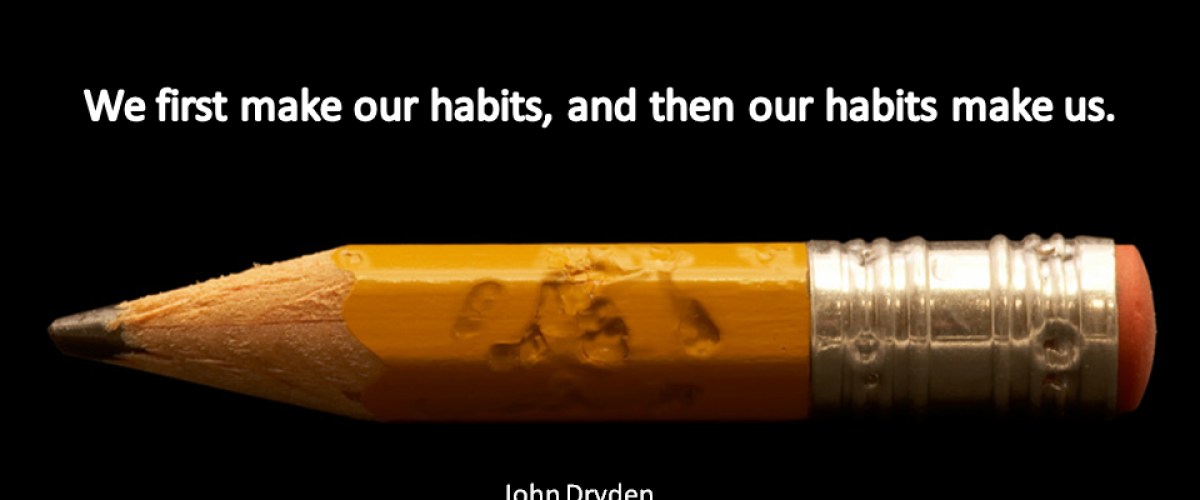
Reprogramming our Habits in an Uncertain World
New diet, New exercise regime, New manager, New world, New You! We have all got attracted to the shiny new thing, only for our attraction to dissipate over time.
How long does it actually take to break a bad habit or create a new one? Why is it that studies have shown that only 8% of people maintain the motivation necessary to persist with their new habit resolutions?
The problem isn’t that we are too weak or that we have a flawed character or that our habits just can’t be changed. It’s more likely that we didn’t have an awareness of the habit process to begin with, have a proven plan and if we are honest, we gave up too soon.
The latest research from the University of London found that it takes over 2 months to form a new habit or break an old one. To have the commitment necessary to ‘create a new you’ we must firstly understand the science behind habit formation and why it really matters.
Why do habits exist?
Our habits can define our life! When we can cultivate empowering, replenishing, value oriented reflexive habits into our daily lives we change the game and our lives forever.
A habit is something that we repeat regularly and eventually becomes a part of our nature. Habits are controlled by our subconscious mind. Recent studies by neurobiologists and cognitive psychologists reveal that between 40 - 95% of human behaviour can be classified as habit.
Even if we consider a modest 50% of our behaviours as habit - this means that we are on auto-pilot half of our waking life. What we think, what we say, and our overall day-to-day actions are occurring often without us even knowing. Many of us are living on auto pilot! Running the same subconscious programs that have been running our lives since we were young children!
Consider then, if we have negative, emotionally destructive habits built into our lives – how is this manifesting in our relationships, our feelings and our actions? And the contrary, what happens when we change the programme? When our reflexive habits are empowering, replenishing and soul nourishing?!
Habits are immensely significant. They are not only a prominent part of our lives, they are our lives. And, we have the power to change them.
Changing the Programme
We can change the programme. To understand how habits can be changed, let us first look at how habits are formed.
Through extensive experimentation, scientists have discovered that a tiny structure located at the centre of the brain is responsible for storing habits. This area of the brain is termed as the ‘basal ganglia’.
The brain converts a sequence of actions into an automatic routine in a process called ‘chunking’. We use hundreds of such behavioural chunks in our daily life and they are the foundation of what we call habits.
In our brains, habits occur in a three-part process. The first step is the cue, then comes the routine and finally we have the reward. This three-part process is termed as the habit loop.
We can focus on changing one key habit at first. Identifying and changing this ‘Keystone Habit’ can eventually lead to a compound effect and a complete reprograming. Similar to downloading a new computer program – we begin to work from a different system. A more powerful system, one that we created, with our deepest values at the core.
Although these changes may not be easy or quick, the rewards are profound.
The Process of Reprograming
The habit loop consists of cue, routine and reward. Using this rule, typically the routine part is altered. We can adapt to a new habit more comfortably when the first and last part of the habit loop is familiar.
The bestselling book ‘The Power of Habit’ by Charles Duhigg offers a fantastic insight into how patterns of habits are formed in the human brain. There are times when we consider some bad habits as permanent and get disheartened when we are unable to alter them. It is important then to understand that continuing to live with these unwanted habits is not our fate. We have the power to change the programme.
Duhigg highlighted the simplicity of the compound effect in a real-life example of a lady called Lisa. Lisa completely transformed her life, initially by focusing on one keystone habit. Lisa was suffering, she didn’t feel she was enough, she was in debt, was overweight, felt miserable and would often turn to alcohol to numb the pain she was experiencing in her life.
Reeling from her husband’s betrayal and sudden divorce, she took an unplanned trip to Egypt. Upon seeing the majestic desert, she made a promise to herself that she would come back and cross the desert at some point in the future. However, she quickly realised that to do this, she must get in shape and the first habit she decided on tackling was to quit smoking.
By focusing on the single keystone habit of smoking, Lisa triggered a domino effect. She lost 60 pounds, ran a marathon, started a masters degree and became self-sufficient again. From a strong enough why she reprogrammed her subconscious mind and changed her life. One habit at a time.
What Lisa discovered; the science has proven. When we structure our resolutions in a certain way they’re much more likely to stick. The very word “Resolution” comes from the Latin word “resolutionem” which means “the process of reducing things into simpler forms”.
To achieve our goal, like Lisa we will need to break down and identify all the parts and habits that are creating the behaviour we want to change.
Here is the scientifically proven 4 step process that we use at Inspiring Excellence in coaching our clients.
Step 1
Find your ‘Why?’
At first you must have a strong enough motivation to ensure that you have the desire necessary to persist with your goals. The bigger the ‘why’, the bigger the possibility of powerful change. What is the most important change that can have the biggest impact on your life today?
“He who has a why to live for can bear almost any how.”
Friedrich Nietzsche
Step 2
Identify your current reality
What are the habits that are holding you back from making this change? This step involves reflection, which is most effective in a distraction free environment, with peace and quiet.
Take out a notebook, Post it pad or simply start to draw your current reality on a clear page. The more creative you are, the more of your subconscious mind will become engaged. As habits often emerge beneath the surface without our permission, art is a powerful way to submerge them.
“Habits are powerful but delicate. They can emerge outside our consciousness or can be deliberately designed. They often occur without our permission but can be re-shaped by fiddling with their parts. They shape our lives far more than we realize- they are so strong., in fact, that they cause our brains to cling to them at the exclusion of all else, including common sense.”
Charles Duhigg - New York Times Bestselling Author of The Power of Habit
Step 3
Draw your Habit Loop
Every habit has three parts: a cue, a routine, and a reward. To identify each part you must pay attention to your environment.
Figure out your cue
Cues can be a specific time of the day, emotional states, or other triggers. We often turn to bad habits in times of excess stress. A simple acronym Psychologists use to help you identify your specific cue is HALT. Is it Hunger, Anger, Loneliness or Tiredness that is the root of your bad habits?
Experiment with different rewards
Habits are powerful because they deliver rewards. To make your resolution stick you must identify your rewards. Why are you drinking 3 cups of coffee every day? To figure it out you must conduct experiments. Eat an apple to see if reducing hunger was the reward you craved. Go for a walk to see if your reward is downtime. On the third day you might discover that the real reason was that you lacked social connection and wanted to meet friends. The reward you were craving was socialisation, not caffeine!
Change the routine
Understanding your cue, routine and reward it now becomes much easier to change. Simply identify a new routine or habit that gives you the same reward. Call to a friend’s house, ring an uplifting person or schedule walks with a group of friends rather than overloading on caffeine because of the lack of social connection.
Step 4
Anticipate the obstacles
Having identified your habit loop, change does not occur effortlessly. Identifying the obstacles when your desire is likely to drop is proven to significantly increase your persistence through the challenging moments.
Using the WOOP strategy of identifying your ‘Wish’, desired ‘Outcome’, key ‘Obstacles’ and a reflective ‘Plan’ for overcoming these obstacles will ensure that you will remain on track when the going gets tougher.
As in the example here, the outcome is much more likely to happen when we have a plan in advance for any perceived obstacle.
Wish - I wish to feel more socially connected through this isolating time
Outcome – I want to meet my friends at least once a week to socialise
Obstacle – I am unsure is this allowed under government regulations
Plan – I will schedule a weekly walk in nature with my closest friend instead
When you’ve achieved your new habit loop, don’t forget to reinforce the reward to close the loop.
How Organizations can Leverage the Science of Habits
The process for change is the same for organisations and teams as it is with individuals, start with focusing on changing a keystone habit and overall change will follow with a compounding effect.
Claude C. Hopkins is considered a pioneer in the field of advertisement. His astonishingly successful campaign for Pepsodent toothpaste resulted in Pepsodent becoming one of the top selling goods in the world.
His campaign leveraged the immense power of his understanding of human habits and psychology.
The two basic rules he used:
1. Find a simple and obvious cue
2. Clearly define the reward.
In the case of Pepsodent, he used the cue of ‘tooth film’ (dental plaque) as a justification for brushing teeth daily and paired it up with the reward of a pretty smile and looking beautiful!
The results, within a decade of this campaign the number of Americans who owned toothpaste jumped from 7 percent to 65 percent!
Starbucks also leveraged the power of habits in their growth strategy which was based on the understanding that will-power is the single most important keystone habit for success. Starbucks spent millions of dollars in developing extensive coaching programs and curriculum to upskill their employees on self-discipline alone.
As a result, this little coffee store originating from Seattle is now the largest coffeehouse company in the world with over 30,000 stores worldwide.
The Last Word
Learning to identify cue’s in our daily life and what triggers certain habits is the first step on the journey to change. By understanding the science behind habits, they are no longer seen as some mystical force that we have no control over.
Remember you are not lazy, weak or uncommitted if you have a challenge in breaking bad habits. There are psychological factors which make breaking from habits a challenge for everyone. Thankfully there is also powerful science that has a proven process to break those same habits and create life changing results.
Focus on one habit at a time and have a detailed plan following these 4 simple steps. You can reprogram your subconscious mind, you can change your habits, you can change your life!
If your interested in expert advice on how to start the process of habit change through uncertainty, reach out to us at perform@inspiringexcellence.ie.
Inspiring Excellence helps people, teams and organisations become their best and thrive through uncertainty. To learn more about our success stories, check out our client testimonials.
Inspiring Excellence
Manager
Sep 10, 2025

In the realm of leadership, success isn't merely about strategy or tactics; it's about mindset. A leader's mindset serves as the compass guiding their decisions, actions, and ultimately, their team's performance. But what exactly constitutes a leadership mindset, and how does it pave the way for achieving high performance?
At its core, a leadership mindset embodies a set of beliefs, attitudes, and perspectives that shape how leaders approach challenges, opportunities, and relationships within their organisation. Unlike technical skills, which can be acquired through training, a leadership mindset is cultivated over time through experiences, self-reflection, and a commitment to personal growth.
One of the fundamental elements of a leadership mindset is a focus on vision and purpose. Exceptional leaders possess a clear vision of where they want to take themselves, their team or organisation and articulate it in a compelling manner that inspires others to join them on the journey. This sense of purpose serves as a guiding star, driving decisions and actions even in the face of adversity.
Additionally, a leadership mindset is characterised by resilience and adaptability. Leaders understand that setbacks and challenges are inevitable, but it's how they respond to these obstacles that sets them apart. Rather than dwelling on failures or succumbing to negativity, resilient leaders view setbacks as opportunities for learning and growth. They adapt their strategies, pivot when necessary, and remain steadfast in their commitment to achieving their goals.
Developing a leadership mindset requires intentional effort and a willingness to challenge oneself. Here are some strategies for cultivating a leadership mindset:
Continuous Learning: Leaders are lifelong learners who actively seek out new knowledge, perspectives, and skills. Whether through reading, attending seminars, or seeking mentorship, investing in personal and professional development is essential for nurturing a leadership mindset.
Self-awareness: Effective leaders have a deep understanding of their strengths, weaknesses, and blind spots. By engaging in self-reflection and seeking feedback from others, leaders can gain valuable insights into their leadership style and areas for improvement.
Emotional Intelligence: Emotional intelligence is the ability to recognize and manage one's emotions, as well as understand and influence the emotions of others. Leaders with high emotional intelligence are better equipped to navigate interpersonal dynamics, build strong relationships, and inspire trust and loyalty among their team members.
Courageous Leadership: True leadership often requires courage – the courage to take risks, make tough decisions, and challenge the status quo. Leaders who embrace courage are willing to step outside their comfort zone, confront difficult situations head-on, and champion change when necessary.
So, how does a leadership mindset translate into high performance? The connection lies in the way leaders inspire, empower, and support their teams to reach their full potential.
First and foremost, a leadership mindset fosters a culture of accountability and ownership within themeselves. When leaders demonstrate accountability for their actions and decisions, they set a precedent for others to follow suit. By empowering employees or colleagues to take ownership of their work and contribute meaningfully to the organisation's goals, leaders cultivate a sense of pride, ownership, and commitment among their team members.
Furthermore, a leadership mindset promotes collaboration and teamwork. Instead of relying solely on their own expertise, leaders with a collaborative mindset leverage the diverse skills and perspectives of their team members to solve complex problems and drive innovation. By fostering a culture of collaboration, leaders can harness the collective intelligence of their team and achieve results that exceed individual capabilities.
Moreover, a leadership mindset encourages continuous improvement and innovation. Leaders who embrace a growth mindset – the belief that abilities can be developed through dedication and hard work – inspire their teams to strive for excellence and pursue new opportunities for learning and growth. By fostering a culture of innovation and experimentation, leaders can drive breakthroughs and stay ahead of the competition in today's rapidly evolving business landscape.
Conclusion
In conclusion, a leadership mindset is the foundation upon which high performance is built. By cultivating a clear vision, resilience, adaptability, and a commitment to lifelong learning, leaders can inspire and empower their teams to achieve extraordinary results. As we continue to navigate the complexities of the modern workplace, fostering a leadership mindset will be essential for driving success, both individually and collectively. So, let us embrace the qualities of a leadership mindset and unleash our full potential as leaders, paving the way for a brighter future ahead.
Inspiring Excellence
Manager
Sep 09, 2025

A 13 year old boy shuffles into a room, confused, anxious and withdrawn. What’s this all about? 30 sweaty teenagers clammed into a hotel room. Windows closed, dehydration fuelled from the dusty air. Water staring at you from the top table like a mirage in the Saharan desert. Your body aching for a drop but too fearful to stand in front of your peers, to approach the hierarchys table and god forbid take the glass bottle of Ballygowan that looked so elegantly poised for this special guest!
The Brandon House Hotel in 1998. An under 14 De La Salle college hurling team,. The special guest? A former Wexford hurler and manager. The topic? Psychology! What? Psychology? Doesn’t that mean there is something wrong with you? People who need that must be mad. There’s something wrong with them? They need to talk to a doctor? This is nuts.
As the guest spoke his body language overpowered the boys inner dialogue and focused his attention, his demeanour changed, the first impression, Passion. He spoke from the heart, from an unflailing belief in what he was talking about. The boy began to listen. About best practise, how he studied the closest related and most successful Olympic Sports team on the planet. The Chinese Olympic hockey team! He devoured every aspect of their training and preparation, stifling through countless Academic Journals, Books and References. Contacting Universitys and purchasing subscriptions. He then sought to apply the key principles in their development to the amateur game of Hurling and in particular to Wexford Senior hurling team.
He focused on discussing the power of visualisation, refocusing, forging team identity through barbeques on beaches with a slab of cans and tents. He spoke about vision and its great to have a dream but more importantly is to have a plan to make that dream reality. Of fear, how it inhibits people, how the most skilful athlete can be swamped or debilitated by it. Of crowds, how they can affect performers? “Think of them as skeletons, merely bones, see through them to the back of the stand”. Of fun, how they told a joke a half an hour before every game. How it released tension and anxiety and freed players. And chewing gum, how it acted as a relaxant. How players could use this before big events. ‘The Next Ball Theory’ a means to eliminit past or future and remain present to what was in the moment.
He took players out of technical training and instead had them practising guided visualisation in a quiet room with a sport psychologist. He created a culture where individual brilliance could flourish but neve at the expense of team values. Finally he recommended a book, The Inner Game of Tennis by Tim Gallowey. The boy was so inspired he went straight home took whatever pennies he could muster up and went into town and went to the psychology section with no nerves, no fear for what would his peers say if they saw him. The book couldn’t be found on the shelf, but he ordered the book in from the desk. He never stopped reading or studying about it since, how the mind controls everything we do, how it inspires how it can transform ordinary people to do extra ordinary things.
Were all inspired by leaders in life and Liam Griffin planted the seed that grew into Inspiring Excellence which is now truly realising its potential. It was an honour recently to receive such a Testimonial from the Inspiration that started it all off. Thanks Liam!
"I can identify with the approach and applications delivered by Inspiring Excellence. I believe the high performance coaching approach adopted to be of the highest international standards. I consider Inspiring Excellence to be based on the delivery of best practice methods supported by high level academic qualifications and aligned with extensive experience. I am confident that the energetic and enthusiastic methods employed can set new standards and empower individuals and teams to consistently deliver on performance."
- Liam Griffin
Liam Griffin founded and developed the Griffin Group, an internationally recognised hotel and leisure business. His business interests include the Award Winning 5 Star Monart Destination Spa.
Inspiring Excellence
Manager
Sep 09, 2025

It was a privilege to work with another All Ireland champion and an athlete who consistently strives to master his craft in business and sport. Patrick Hanley had a vision and dedicated himself to achieving his best ever performance by focusing on what was in his control to repeatedly enter a 'Flow' sate.
To enter this 'Flow' state we need to be challenged and stressed to the point where we make flow happen and become at one with the process. As Bulgarian Psychologist Mihayli Csikszentmihalyi explained, “The best moments usually occur when a person’s body or mind is stretched to its limits in a voluntary effort to accomplish something difficult and worthwhile. Optimal experience is thus something we make happen.”
To win the All Ireland Patrick had two very tight games and in the final defeated the most dominant player in Irish Racquetball. Throughout the contests Patrick's self talk was at a minimum and he described his experience as playing 'more by feel than thought or tactic'.
Ultimately Patrick made flow happen and you can too.
There are key prerequisites of the flow experience:
The sense of time becomes distorted
There is a balance between challenge and skill
There is clear goals
There is no worry of failure
Distractions are excluded from consciousness
The activity is an end in itself
Self-Consciousness disappears
Action and Awareness are merged
Consequently the ‘Flow’ that is often experienced by athletes at the top of their game can certainly be more accessible to executives, leaders and performers with consistent mental preparation.
"Shane helped me win the 2017 Senior Racquetball All-Ireland title. By identifying exactly what is needed for that optimal performance. Shane' s approach to sports psychology educates and provides you with the skills necessary to find that flow state again and again . Find your flow state and performance appears effortless. Its a feeling you cannot be without!!"
A picture paints a thousand words.
Inspiring Excellence
Manager
Sep 09, 2025

Cultures metamorphosed recently in the same cauldron that Doug Howlett identified with. All Black great, Joe Rokocoko stood in front of a packed stand in Jean Dauger stadium in the colours of the most southerly Top 14 team in France, Bayonne. As he approached the field with his teammates, men, women and children stood like oaks and with the choreography of an orchestra, proudly bellowed out their club song. The song culminated in the kick off as drums were beaten with ferocity and flares lit up the sunniest of skies.
<iframe allowfullscreen="allowfullscreen" class="embed-responsive-item" frameborder="0" src="//www.youtube.com/embed/hdvYcNMv-Hk"></iframe>
The south of France, Rugby, Intensity, Passion. What’s it all about? Munster folklore would tell you that warriors like Galwey, Wood and Foley found this place different, intimidating even. Even an All Black is not at home in this cauldron of intensity, "I had been in intimidating atmospheres before, having travelled to South Africa a lot with Super teams, but this was different. Drums were beating, the crowd were singing and flares were going off in the stand.” (Doug Howlett reflecting on his All Black experiences in the South of France.)
Warriors from a warrior culture, the most successful team in history, the famous All Blacks, the Haka, “intimidated”. Different. Cast your mind back to the 2007 World Cup Quarter Final, the French team simultaneously wore the colours of their national flag and stepped right up to the line as the All Blacks war danced (France won 20-18:https://www.youtube.com/watch?v=ebZVMc0NKZs).
Or the 2011 World Cup final where the French team formed the shape of a spearhead directed at the Haka (France lost narrowly 8-7: https://www.youtube.com/watch?v=rcXSNsd9-NY). On both occasions the French turned the psychological edge that the Haka gives the All Blacks on its head. They visually demonstrated their intention to the opposition, the spearhead directed at the core of what it meant to be an All Black.
It was a colleague of Jean-Marie Goyheneche (Sport Psychologist) who recently explained to me the influence that he had on that French team. Psychologically the Haka has often intimidated opponents and has provided a great opportunity for the team to reach peak intensity at the appropriate time (The Haka is performed last thing before kick-off). Goyheneche knew that this advantage could be eliminated and surpassed by the motivation, unity and belief that would result from the French standing in unison and approaching the Haka exuding courage, passion and confidence. Different.
How does a player deal with such emotion? What impact does it have on his concentration levels? Is it an advantage? These questions can only be answered with a deeper understanding of concentration. Concentration entails the ability to focus attention on the task at hand and not be affected or disturbed by internal (thoughts) or external distractions. Selective attention involves being able to choose to attend to specific things going on and to ignore others.
It's about being totally in the moment, in the here-and-now. Peak performance occurs when athletes are able to voluntarily concentrate on the relevant cues in their environment to win a ball, to make a relevant run or to spot a danger. Once the emotion in intense occasions is used to sharpen ones concentration on the relevant tasks inherent in a successful performance it can certainly assist an athlete’s performance. Experienced players tend to channel this positive energy into tackles, breaks, smart runs and key on field observations. During emotional occasions players often lose concentration at vital times in a contest. Refocusing cues or identifying what is important in a player’s performance is paramount for players to maintain concentration on what’s relevant in the heat of an emotionally charged battle.
Watching Bayonne V Toulon and Bayonne V Oyannax recently, the key players could deal with this emotion extremely well and were excellent at transferring it into the tackle. Their ability to tackle with ferocity and then within the same play, transfer this narrow focus to a broader concentration span was excellent. Concentration can often be misunderstood. The simple example that is often used in psychology parlance is that of a miners spotlight, narrowing and broadening its focus where required. In GAA or soccer a goalkeeper might require a narrow focus to save a penalty but a much broader focus to find a winger/midfielder with a kick out. In the penalty kick the goalkeeper only has to focus on the player and the ball where as with the kick out there are many more variables at play, opposition players, wind, distance and movement. Stephen Cluxton the Dublin footballer is an artist at this very skill and indeed he dictates games as a result. As was Tipperary goalkeeper Darren Gleeson in their convincing All Ireland hurling semi-final win over Cork. This ability is a psychological skill that is acquired through thought control, an understanding of how to switch your concentration width from narrow to broad or vice versa and consistent practice.
Rokocoko in particular had an outstanding game against Oyannax, he remained calm and conservative of his energy throughout his performance but at the vital moments when he intuitively sensed there was an opening in the opposition defence he was full of passion and sharpness. He found himself in the right place at the right time, all the time. Like the miners spotlight, he could broaden or narrow his focus at will. He was directly involved in three of Bayonne’s tries against Oyannnax and was unluckily denied another by the TMO. He constantly switched wings at will as he sensed danger or opportunities in the game (Broad Concentration Span). Once in the right place he pulverised opponents with tackles or made direct incisive runs to break the opposition line (Narrow Concentration Span). He had a fantastic ability to remain calm when he was not directly involved in the play and then increase the intensity of his concentration when required. Defining concentration zones is a skill that many top professionals are excellent at; they use it to conserve their emotional and physical energy when it is not required for when it’s required the most.
Players often use the traffic light technique where they associate the traffic light colours Green, Orange and Red with different zones when the ball is in play on the field. For example if your team is attacking in the opposition third, a goalkeeper can associate that with green (relax), when the ball is in play in the middle third the goalkeeper can associate this with orange (aware) and when the ball is in the defending third the focus is associated with red (alert). Many athletes I have worked with found that this technique helped their performance. Others intuitively implement this concept. This allows players to conserve energy and sharpen their focus when required the most. Rokocoko was a genius at this and his experience at implementing this technique for the All Blacks was clearly evident in his performances for Bayonne.
Chatting to the English speaking players, particularly Rokocoko and Dwayne Haare I was intrigued by their genuineness. They were fantastically grounded and were very open about their performance and the games. It reminded me of a paper I read recently in The Sport Psychologist journal. The article focused on the key aspects that made the All Blacks the best. One of the key themes emphasised by All Black management during the last two world cup campaigns was the slogan “Better players make better All Blacks”. Key to this theme was the word respect, respect with your team mates, the game and the fans. The All Blacks constantly swept their dressing rooms after matches. Manager Graham Henry empowered team members to the extent where they would have formal meetings at the start of each training week and plan exactly what drills they would focus on in preparation for the next game. Subsequently they would meet the management and come to an agreement on what way the training week would run. The dual management model employed meant that the players had more ownership of the team and hence felt more motivated and responsible for their actions. Richie McCaw epitomised their ideals, “The jersey will show up frauds, the impostors. It’ll squeeze those who look for short cuts. You won’t last in this jersey if you’re not prepared to do the things you need to do to fill it.” (http://journals.humankinetics.com/tsp-back-issues/tsp-volume-28-issue-1-march)
The mind-set and the passion that both rugby cultures exude are unique. The Colosseum in Ancient Rome came alive at the sense of a battle. An All Black ignites after a Haka. A French rugby player responds to a great challenge and a passionate crowd. Like the Gladiators of Rome it’s how your mind can use this passion, this heightened sense of arousal to concentrate on the relevant cues within the environment. This ancient skill separates life from death, winning from losing.
“Where your mind goes, everything follows.”
Inspiring Excellence
Manager
Sep 09, 2025

Roy Keane and Psychology. The man and the myth. What’s he really like? From a psychological perspective he is a man of deep intrigue. He’s the guy who took a punch in the face off his first professional manager Brian Clough. Although he claims he owes him everything for giving him his chance in football. The kid who when asked by his first international captain , Mick McCarthy, if he called his behaviour professional, replied by asking if McCarthy called what he had a first touch!
The guy who supposedly set out to inflict serious injury to a fellow professional, Alfe Inge Haaland in a two footed lunging tackle is the same guy who turns up unannounced at Dublin’s children’s hospitals. The Keane who ran a vendetta against Patrick Viera is the same Roy who toils away consistently on behalf of the Irish guide dogs for the blind association.
One thing is clearly apparent, when Keane is confronted with a threatening situation he will always fight. This is the very aspect of his personality that makes him who he is.The fight or flight response evolved in humans, fight was manifested in aggressive, combative behaviour and flight was manifested by fleeing potentially threatening situations. In all personalities these responses persist today. By keanes own admission in his most recent book, “I never got a red card when the team was 3-0 up!” The fight response has been clearly described in numerous examples he himself has identified, head butting Peter Schmeichel, verbally attacking Alex Ferguson and Carlos Queiroz in front of the Manchester United players, slating his teammates on MUTV after a 4-1 loss, injuring Haaland, resigning from Sunderland, the list goes on. Would you rather have a volatile character such as Keane in your dressing room? A man who fights in every threatening situation, regardless of the consequences? Or would you rather have a flyer, a person who shy’s from confrontation? One who prefers to leave the dust settle.
Athletes need a situational awareness to know when is the right time to fight and when to leave a volatile situation settle. This comes with experience and situational awareness and also with some sound self-control techniques. Deep breadths and an intake of oxygen can work wonders. Sport Psychology is not rocket science and is often the teaching of a wise sage in a common place. In Keanes latest book he identifies many moments where he could of took a deep breadth and diffused a situation. Keane has a growth mindset, believing that he can learn from every situation. This is what marks him out as a man whose career in football will continue to evolve. He has visibly become less volatile as he has aged. Keane used sport psychologist Bill Beswick in his career and during his time as Sunderland manager. His refreshing outlook on psychology is uplifting for any consultant working with athletes.
Inspiring Excellence
Manager
Sep 09, 2025

Albert Einstein once said he never made any of his discoveries through the process of rational thinking. As time has passed, science has proven that it is indeed our intuition that leads us to our greatest insights.
The majority of people are reading this article from a smartphone, This may not of been possible had it not been for the intuitive insights of Steve Jobs. As he once described, intuition for him was more powerful than intellect. It was the medium by which he made his greatest breakthroughs.
Often, we consciously analyse and re-analyse how we can get the best performance out of ourselves. The premise being that the more thought we give to something, the better our chances of success.
The latest research has presented conflicting ideas. What lies beneath the surface of the conscious mind is often the area we need to tap into. Here, we find the insights we require to be at our best.
Picture an iceberg. We know that roughly 90% of an iceberg is hidden beneath the surface of the water and about 10% is visible, above the surface. Neuroscientists at esteemed institutions like Stanford, Harvard, MIT and others have determined that the human brain operates in much the same way.
Your conscious mind makes up less than 10% of your total brain function. That means that the subconscious or unintentional aspect of your mind represents about 90% of your total brain function.
In Nobel Award winner Daniel Kahnemans award winning book ,”Thinking Fast and Slow”, he put forth a theory of two distinct ways the brain generates thoughts, based on his many decades of psychological research.
In System One, thoughts are fast, automatic, frequent, emotional, and subconscious. In System Two, thoughts are slow, effortful, infrequent, logical, and conscious.
Psychologists have long understood the benefits from engaging and listening to system one more commonly known as your intuition. Kahneman reinforced the power of the subconscious by referencing two recent scientific studies.
In a Salk Institute study, participants were asked to play a card game where they pulled cards from two different decks. The decks were rigged so that one would “win” more often than the other, but the participants didn’t know that—at least, not overtly. It took about 50 cards for participants to consciously realise that the decks were different and about 80 to figure out what that difference was.
However, what was really interesting was that it only took about 10 cards for their palms to start sweating slightly every time they reached for a card from the “losing” deck. It was about that same time that they started subconsciously favouring the “winning” deck.
In another study, car buyers who relied on careful analysis of all of the available information were happy with their purchases about 25% of the time, while buyers who made quicker, more intuitive purchases were happy with their purchases about 60% of the time!
Intuition is a primitive brain function and it comes from the earliest days of human existence when detecting hidden dangers ensured our survival. These days our subconscious responses still exist however we use this capability so little that we don’t know how to listen to it properly.
Paul McGinley, Europe’s victorious Ryder Cup Captain understood the power of the subconscious more than most. He knew that the subconscious uses imagery and symbolism to express itself. He dedicated himself to speaking at team meetings for less than seven minutes, allowing the image he portrayed to empower his message and filter into the subconscious mind of his team.
McGinley was a keynote speaker at the GAA Coaching Conference held in Croke Park recently. He spoke of how he motivated his team by briefly explaining the meaning of particular images and allowing the players subconscious to do the rest.
Before the final round the European team had a considerable lead. McGinley used the image of an immovable rock being showered by rough waves. His idea was to portray the reality that the USA team were going to come back fighting and gain significant ground on them early on the final day.
The reaction he hoped for was that the European team were going to act like an immovable rock remaining calm and clear under the pressure. Team Europe would absorb wave after wave of team USA’s onslaught. The image certainly portrays a thousand words and it represented exactly what happened on the final day.
How can you tap into the potential of your subconscious?
Slow down enough to hear your inner voice. Before you can follow your inner voice you must first be able to hear it. Slow down from your busy life and allow yourself some mental space from the hustle and bustle. Solitude is the best environment for reflection. Take a walk, reconnect with nature or simply find your own personal space for reflection.
Listen to your inner voice. In the modern world people often dismiss their intuition to focus on what their conscious and analytical mind tells them. You can incorporate both but don’t let your analytical mind talk yourself out of something that your intuition already knows.
Practise Empathy. We can practise being totally present to people’s heart, body and mind. Put your phone away and give all the attention that you have to people. We can develop an intuitive awareness of what people are thinking and feeling from cues such as their tone of voice and body language. This is a powerful facilitator in making deep connections.
Visualise. Visualising what success looks like to you is a powerful way to allow your dreams filter into your subconscious. Visualise with vividness by incorporating great detail into your images. Engage all of your five senses to hear, feel, touch, taste and see what exactly it is you’re becoming.
Ask yourself questions that fire up your imagination. In order to get the right answers we must first ask the right questions. You may be facing a particular challenge in your life. Ask yourself an empowering question based in the present tense. Then respond with the first image that comes to your mind. As the subconscious uses symbols and imagery to express itself, this simple exercise often reveals the answer to your question in a poignant way.
Practise mindfulness. Mindfulness can be described quite simply as a practise of being in the moment. The more in the moment we can be in our lives the deeper our connection to our intuition. Mindfulness de clutters your environment and your brain allowing it to perform at its true potential.
The benefits.
The research is clear there is a significant percentage of our potential that lies underneath the surface. Luckily we can tap into this potential to make better decisions and acquire more clarity in our often busy lives.
ABOUT THE AUTHOR
About the Author:
Shane O Sullivan is a Performance Psychology Consultant and Executive Coach to some of the best in Ireland, training the mindset skills essential to revealing ones potential. He has a passion for high performance and has worked in the trenches of high stakes environments throughout his sporting and business career. He is a member of the European Mentoring and Coaching Council and the Coaching and Mentoring panel of Enterprise Ireland.
Inspiring Excellence
Manager
Sep 09, 2025

Inspiring Excellence recently became certified in the most robust and thorough personality assessment instrument in the world.
With over 30 years of development, validated by over a 1000 scientific studies, Hogan’s individual and team assessments are used to enhance the selection, training, leadership identification, development, change management and staff retention processes. Hogan’s psychometric suite is used by over 66% of the Fortune 100 companies.
Added to Inspiring Excellence's accreditation in the Emotional Intelligence Report (ECR) and the Emotional Sports Inventory (ESi) for elite athletes, we now provide clients with the complete toolkit of personality assessments that can underpin leadership, talent and team development specific to your organisations goals and employee roles.
For more information on our comprehensive psychometric suite contact perform@inspiringexcellence.ie or check out Hogan Assessments at a Glance
Inspiring Excellence
Manager
Sep 09, 2025

We all know that exercise is a proven game changer. It boosts our health, wellbeing, confidence, focus, performance and ultimately our lives. However science has only recently caught up to the specific benefits. In the early 20th Century, science struggled to prove that endorphins fill your body during exercise and that your hearts capabilities multiply phenomenally. It was a relatively new research area. Those who exercised relished the benefits, those who did not were none the wiser.
Mindfulness in recent times seems to be where exercise was in the early 20th century. Science is only recently proving the remarkable benefits. These benefits of which are only experienced by those who practise it. In the same time span it took for exercise to be universally understood as revolutionary, mindfulness as a practise will flourish.
In the relatively near future, mindfulness will become universally accepted as a silver bullet of stress relief and performance enhancement. Quite simply, mindfulness changes the structure of your brain.
Researchers from the University of British Columbia recently studied data from more than 20 studies to understand how practicing mindfulness affects the brain. The researchers found significant changes in eight brain regions, two of these regions are particularly important.
In these brain regions, the simple act of practicing mindfulness increased both brain activity and the density of brain tissue.
1. The Prefrontal Cortex is responsible for our self-control. It enables us to focus on what we want when we want, hence avoiding distractions and making better decisions.
2. The Hippocampus has many functions but its primary one is its resilience in the face of adversity and failure. The hippocampus is damaged by stress and hence is a development area for all of us.
Mindfulness is a form of meditation that changes the structure of these brain areas. Remarkably, science has proven that it only takes 10 minutes a day for 6 weeks to begin this process.
Mindfulness is a simple form of meditation that allows us to observe our thoughts, feelings and behaviours and ultimately gain control of them. It is a skill that once developed allows us to be more focused even when we are not meditating. Mindfulness reduces stress as it develops the skill of gaining control over our thoughts and stopping our minds ruminating to the negative.
In a similar way that muscle exercises develop muscular strength, mindfulness develops mental strength. It develops this mental strength in specific regions of our brain that make a remarkable difference. It is perhaps the greatest form of mental training that we can engage in and its benefits have a multiplier effect.
It develops our ability to be present and fully engaged without judgment at each moment of our lives. Hence, we become more productive, engaging and empathic to others, truly experiencing life in a state of presence. This list represents only a few of the observed benefits of meditation according to science. Psychology Today has compiled a much longer list of the benefits of meditation here.
Thankfully, mindfulness doesn’t have to be practised in a certain position or in a monastery. It can be incorporated into your daily routine with just a few minutes every day, anywhere, at any time. Here are 4 simple ways to begin the process.
Practical Ways to Develop Mindfulness
Connect With Nature
We can meditate by simply going for a walk. Find a location that fits your lifestyle and desires. Mindfulness can be practiced on a busy street just as it can be on a secluded beach. Begin by focusing on your steps. Feel each point of contact on the ground as you stride. Move your awareness without judgment and engage all your senses. What can you feel in the rest of your body as you move? What can you hear? What can you see? What can you taste? What can you smell? When your mind wanders bring it back to a single point of focus. When we connect with nature - the fresh air, the beautiful scenery and the sounds of the birds can have a beautiful impact to take us away from the many stresses of modern day life. The result is renewed energy, optimism and a greater capacity to control our thoughts.
Focus On Your Breadth
Sit on a chair upright in a comfortable position. Allow your feet to sit flat and parallel on the floor. Place your palms in a comfortable position on your thighs. Relax your shoulders. Allow your focus to begin by following your breath. Observe your diaphragm expanding and contracting with each inhalation and exhalation. Feel the air travelling through your nose or mouth and follow its course down your windpipe to your lungs, observe the feeling in the core of your stomach. Then feel your body as it pushes the air back up through your lungs and releases it calmly through your mouth. If you get distracted, don’t worry, calmly let the distraction pass and bring your attention back to your breath. With practise your ability to focus on your breath for longer and refocus on your breath after distractions will greatly improve.
Take a Power Breath
When you feel overwhelmed by a strong emotion entering your body, you can follow a simple 4 step process scientifically proven to dissipate its power (C.A.B.A). Firstly, ‘Call’ the emotion your feeling (i.e., Anger). ‘Accept’ that’s what you are feeling (I am angry). ‘Breathe’ deeply using a power breath, inhaling deeply through your nose into your lungs and then releasing the air back up through your mouth. Finally, ‘Action’ a positive strategy to take your mind away from the negative emotion. This can be a simple refocusing strategy by wiping away the feeling with your hands or repeating a more positive mantra such as ‘I am in control’.
Challenge Yourself
Some of the early research on focus started diligently during World War II. Early research studies on fatigue and concentration levels unearthed fascinating conclusions. It was found that although ability to focus was reduced with lack of sleep, participants in extremely challenging circumstances could maintain their focus at a high level for longer than 24 hours.
Although this research was conducted in life or death environments the message still holds true. If we are challenged by an activity we often become more focused and hence present to it. In this space we enter a mindful state, completely absorbed in the activity. This can often be found true for athletes who perform in the moment, totally immersed in an activity of great challenge.
In this space we often find our most content moments in life. As Bulgarian Psychologist Mihayli Csikszentmihayli stated in his fascinating book on ‘Flow’, “Our greatest moments in life are not the passive relaxing ones but the ones where our body or minds are stretched to their absolute limits.”
Therefore, when we have optimum amounts of challenge in our life we are naturally brought to focus in complete immersion on the task at hand. The feelings from which flood our mind with 5 of the most potent endorphins imaginable. In this mindful state we become 500% more productive. In practical terms if we could maintain this flow for a day we could work on a Monday and take the rest of the week off!
The Benefits
Mindfulness is a simple exercise we can all develop into our lives. When we understand the why of mindfulness, we can overcome the how with these simple strategies that can be integrated seamlessly into our everyday lives. Mindfulness changes the lens in which we live our lives. It underpins our ability to focus on what we want, when we want. We learn how to de-stress at will, observe our thoughts and change them, immerse ourselves in our everyday experiences and build remarkably deep connections with others. For something so simple that changes the structure of our brains and has a multiplier impact on our lives, what's stopping us starting today?!
What forms of meditation have you tried? What impact has it had on your life? Please share your experiences in the comments section below. We learn together.
ABOUT THE AUTHOR
Shane O Sullivan is a Performance Psychology Consultant and Executive Coach to some of the best in Ireland, training the mindset skills essential to revealing ones potential. He has a passion for high performance and has worked in the trenches of high stakes environments throughout his sporting and business career. He is a member of the European Mentoring and Coaching Council and the Coaching and Mentoring panel of Enterprise Ireland.
Inspiring Excellence
Manager
Sep 09, 2025
Stay up to date with the latest news, announcements, and articles.